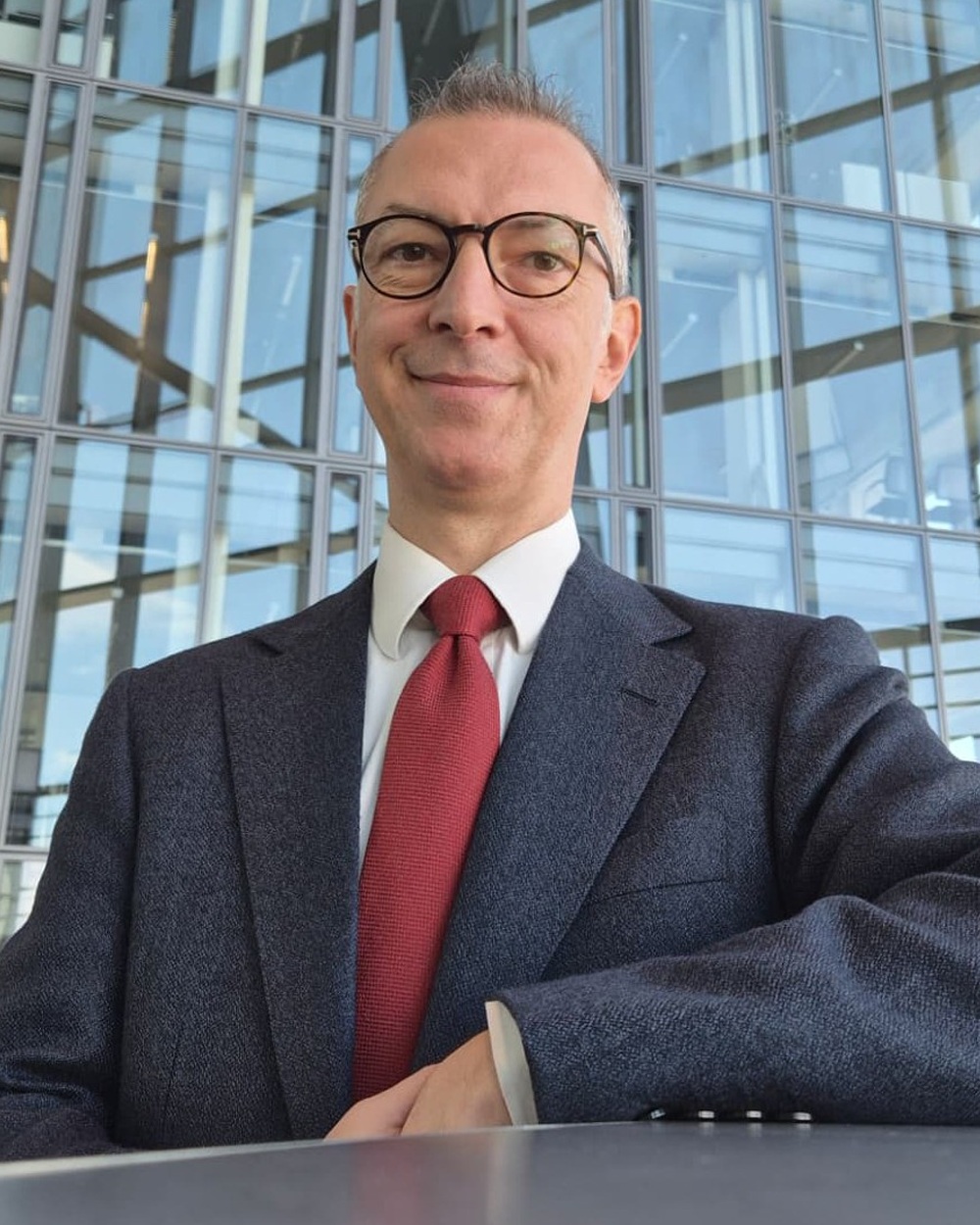







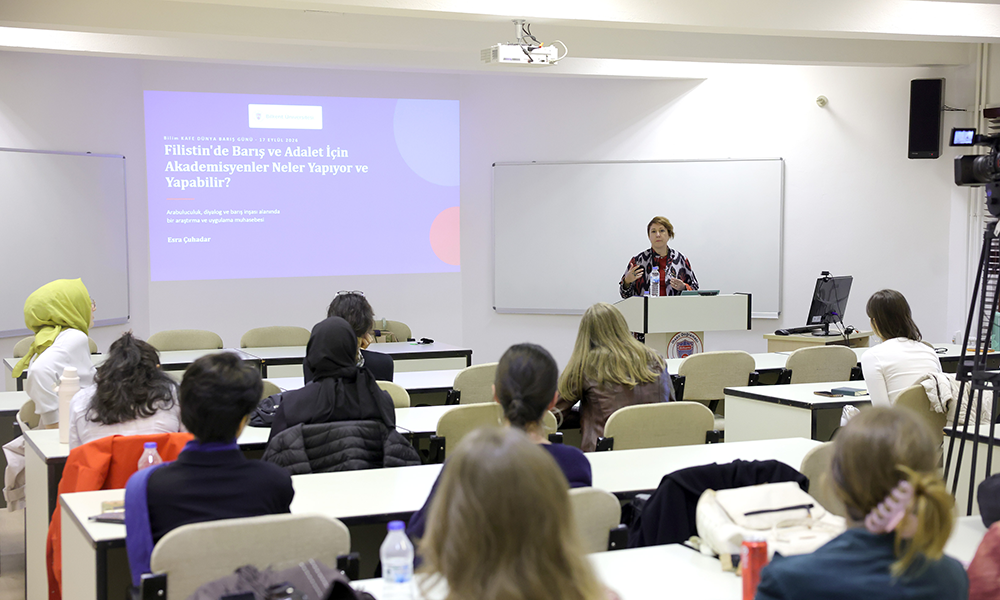
Assoc. Prof. Esra Çuhadar of the Department of Political Science and Public Administration and the Department of International Relations discussed with students how academics can contribute to peace and justice in Palestine.
As part of the Science Café (Bilim Kafe) series organized by the Council of Higher Education (YÖK), Bilkent hosted a seminar titled “Being a University in Gaza: How Can Academics Contribute to Achieving Peace and Justice in Palestine?” on Thursday, September 17. The event took place in room A-130 of the Faculty of Economics, Administrative and Social Sciences and drew a large student audience.
Drawing on her research and practice in mediation, dialogue and peacebuilding, Dr. Çuhadar built her talk around two distinct but mutually reinforcing roles of the academic. The first is the “peace researcher,” who makes the causes and dynamics of conflict visible and tests whether peace interventions actually work. The second is the “scholar-practitioner,” who provides training, designs and facilitates dialogue processes and builds networks for peace.
Dr. Çuhadar outlined the kinds of knowledge peace researchers produce through mapping, evaluation, theorizing, critique and knowledge transfer. Dr. Çuhadar closed her talk by describing the academic’s task not as ending conflict, but as making the workings of conflict knowable and the building of peace learnable—and, in doing so, not remaining silent.