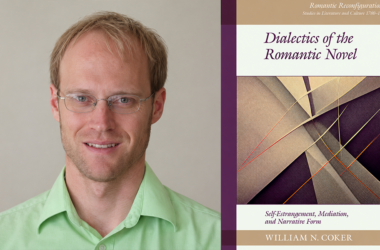








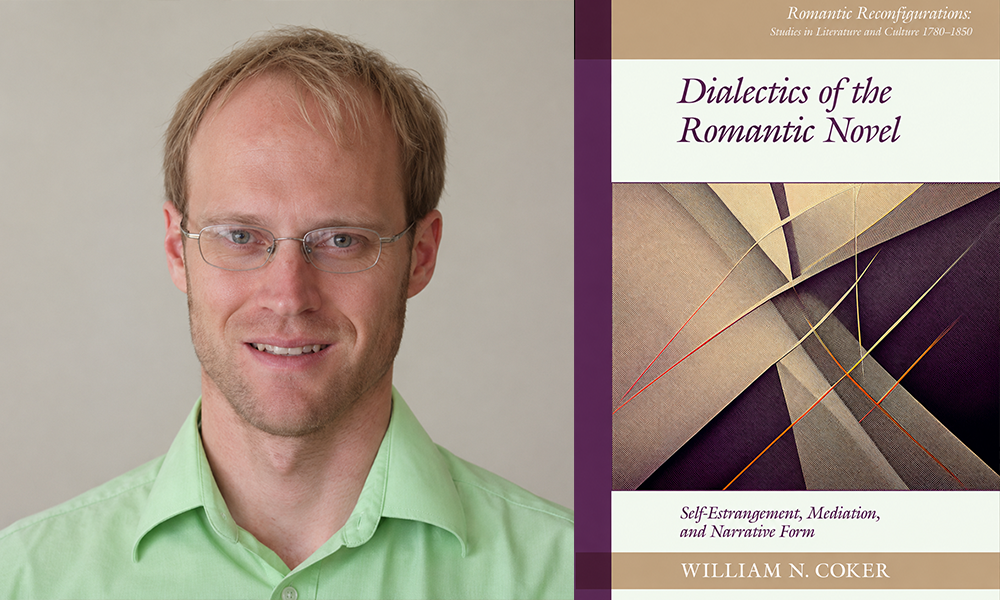


Asst. Prof. William N. Coker of the Cultures, Civilizations and Ideas (CCI) program has published a new study on the emergence of the Romantic-era novel in Europe in the aftermath of the French Revolution.
Published by Liverpool University Press, “Dialectics of the Romantic Novel: Self-Estrangement, Mediation, and Narrative Form” examines how the novel helped revive dialectical thought — a way of understanding the self and society through their internal tensions and contradictions.
Rather than treating “Romanticism” as mere sentimentality or escapism, Dr. Coker shows how Romantic-era authors grappled with the deep anxieties of modern life. He contends that instead of presenting harmony, these writers embraced internal conflict as an enabling condition for human freedom.
Through fresh readings of classic works — including Mary Shelley’s “Frankenstein,” Johann Wolfgang Goethe’s “Wilhelm Meister,” and the writings of Rousseau, Jean Paul and Friedrich Hölderlin — “Dialectics of the Romantic Novel” connects 19th-century fiction to a long philosophical conversation stretching from Plato to Hegel. In doing so, it reveals how these stories continue to offer vital insights into what it means to live with contradiction.