



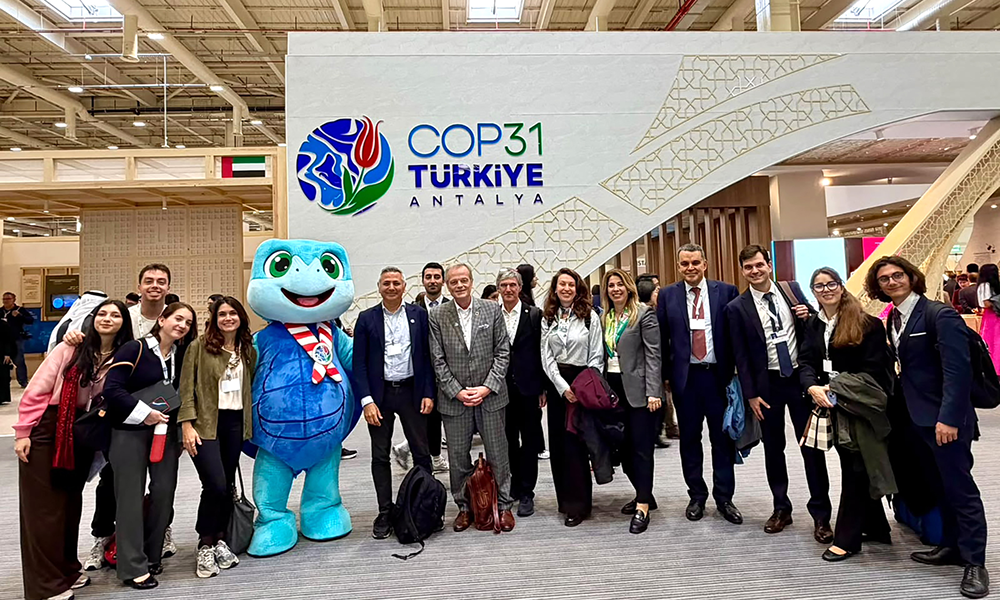


Bilkent University contributed to the COP31 UN Climate Change Conference, hosted by Türkiye in Antalya, with three panels in the Blue Zone and 17 projects in the Green Zone. The panels addressed the governance of the green transition; corporate sustainability and the legal regulation of sustainable finance; and the circular economy and zero-carbon buildings, while the Green Zone projects showcased research and innovative solutions in energy, buildings, cities, the environment and governance.
On November 12, a panel titled “The Impact of the Circular Economy on Whole-Life Zero-Carbon Buildings,” moderated by Prof. Yasemin Afacan, Dean of the Faculty of Art, Design and Architecture, examined how net-zero carbon in buildings requires addressing both embodied and operational emissions across a building’s life cycle. The panelists were Asst. Prof. Nuri Cihan Kayaçetin, Dr. Umut Berker Sevilmiş, Assoc. Prof. Matti Kuittinen and Helle Redder Momsen.
On November 13, Prof. Başak Baysal, Dean of the Faculty of Law, moderated “Driving the Green Transition: Lessons from Türkiye on Regulating Corporate Sustainability and Sustainable Finance,” on the country’s shift from voluntary guidelines toward binding rules, with panelists Asst. Prof. Nilay Dayanç, Seçil Sayın Kutluca, Asst. Prof. Abdurrahman Kayıklık, Asst. Prof. Cem Veziroğlu and Antonio Sgura.
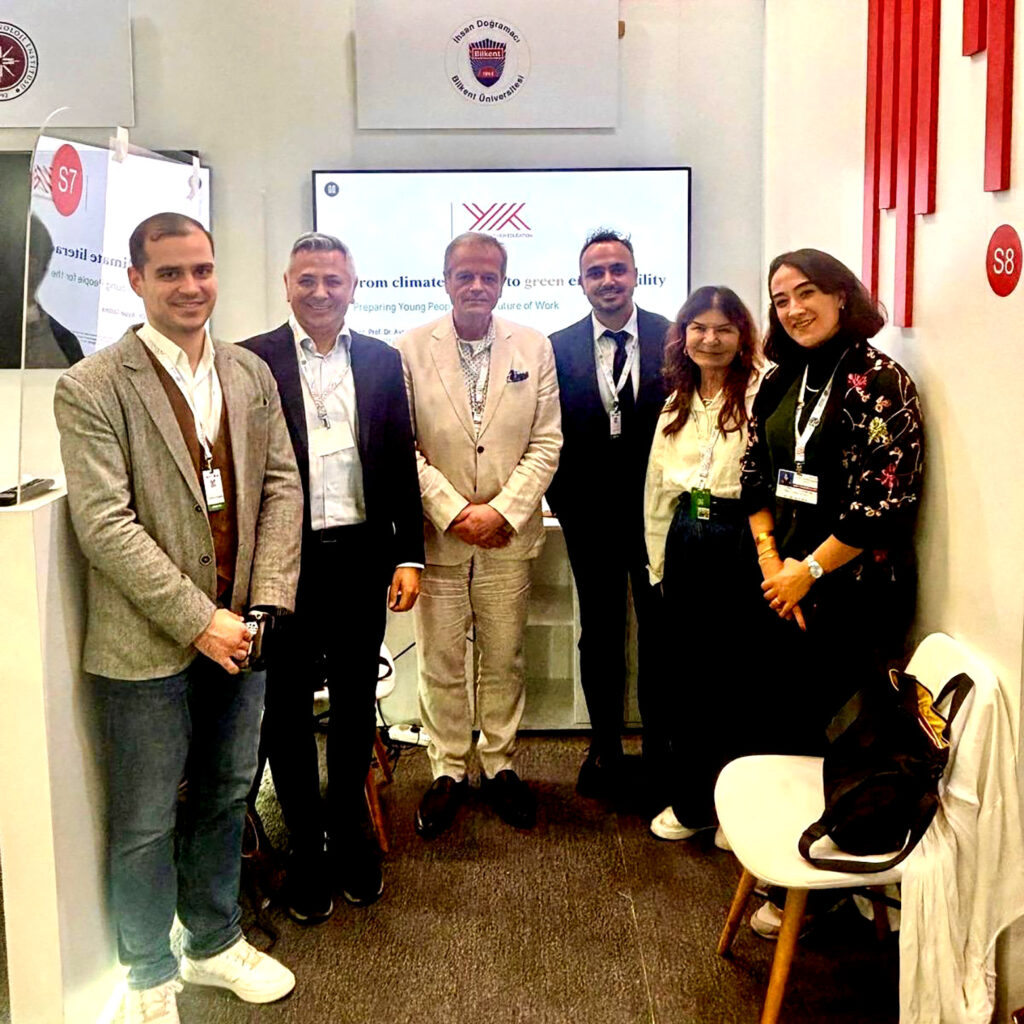
The same day, Assoc. Prof. Seçkin Köstem, Chair of the Department of International Relations, moderated “Governing the Green Transition: Perspectives from the Social Sciences,” with panelists Prof. Dirk Matten, Assoc. Prof. Emel Özdora and Assoc. Prof. Tolga Bölükbaşı. In the Green Zone, on November 15, Bilkent presented 17 projects at Stand 8: eight displayed at the stand, eight shown on a shared digital screen and one introduced in a panel session.
The projects spanned fields from zero- and positive-energy buildings and circular construction to urban park microclimates, rural electrification, sustainable soft robotics, climate literacy and green employment.