




BY EHSAN SHAREEF (CTIS/III)
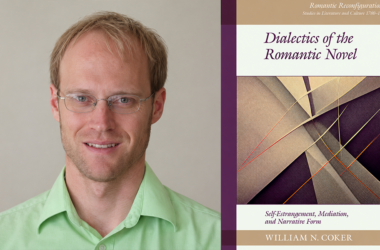
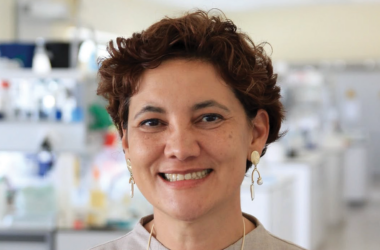
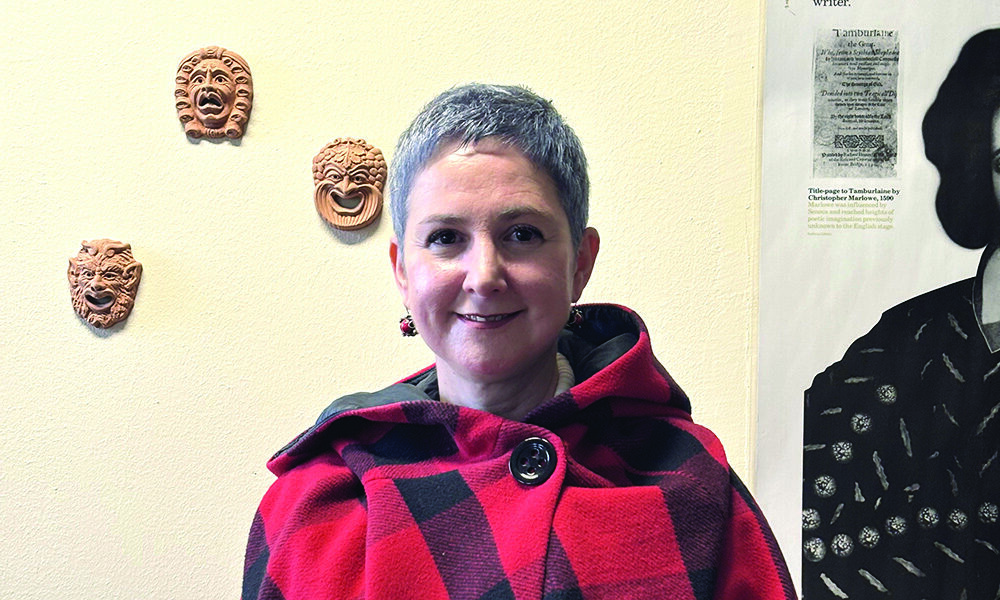
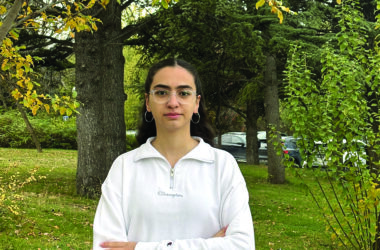
Dr. E. Banu Paksoy is an instructor in the Department of Performing Arts at the Faculty of Music and Performing Arts. She earned her first master’s degree in political science from Ankara University, followed by a second master’s degree and a PhD in philosophy from KU Leuven, Belgium. Her research explores the relationship between political philosophy and theatre, examining theatrical texts and theatre history from a philosophical perspective. Her first book, “Tragedya ve Siyaset: Eski Yunan’da Tragedyanın Siyasal Rolü” (Tragedy and Politics: The Political Role of Tragedy in Ancient Greece), was published in 2011. At Bilkent, she teaches Introduction to Theatre History and Textual Interpretation and Analysis I and II. Beyond her academic work, she writes poetry, some of which was published in “Yapraklar” (Leaves) in 2021.
Why did you choose an academic career?
I chose an academic career because I love doing research and enjoy diving deep into things that I find interesting and important. I always felt that four years of faculty study were too short for my curiosity. Especially after I became interested in the relationship between philosophy and theatre, I felt like I needed to broaden my knowledge and perspective. In this respect, I am very grateful that the years I spent in Belgium opened a new horizon on the demands of a fulfilling academic life, which, for me, needed to be dedicated to interdisciplinary research. I also very much enjoy teaching and interacting with students. This is another reason why I think choosing an academic career was the right path for me.
What subject do you most enjoy teaching, and why?
I enjoy both of the courses I teach, but in different ways. Introduction to Theatre History is an elective course, and students come from different departments, so I have a chance to meet different perspectives and interests. I especially like encouraging students to discover and appreciate theatre as one of the oldest forms of art. In this course, starting with the origins of Ancient Greek theatre, we explore the rich socio-cultural, philosophical and historical dimensions of theatre throughout different periods. We also read some masterpieces of important playwrights, asking important critical questions related to the texts. Sometimes it is a challenge for the students, but I really enjoy our class discussions. The other is a required course that I teach in our department. In this course, I very much enjoy doing close readings of different theatre plays with a small number of students. By applying some essential tools of script analysis, we learn how to read and interpret a play, always giving priority to the playwright and trying to understand what he or she wants to say to us. I believe it is a wonderful experience to discover the different layers of a script, which is itself a piece of art, by respecting the very act of reading and interpreting as an open-ended process.
What projects are you working on currently?
Currently, my main project is a study of Shakespeare’s tragedies in the context of Renaissance political thought. Closely connected to this is my interest in interpreting Shakespeare’s theatre as a public space where a very special kind of interaction occurs between the actors and the audience. Alongside these topics, due to its important connection to Shakespeare and Renaissance drama, I am also working on Ancient Roman tragedy. Roman tragedy is mostly associated with Seneca, but the tragedians who preceded him are less known and less studied, which is exactly why I find this topic interesting to explore.
What excites you about your work, and what is the coolest thing about it?
The coolest thing about my work is trying to help students learn and discover important facts and dimensions about theatre, and also to show them how closely it is connected to life. By its very essence, theatre is one of the most humanist forms of art. I very much value theatre’s important role in developing our sensitivity to empathy and toleration. Another thing that excites me is being exposed to very insightful, original questions asked spontaneously in class. In this respect, students lead me to discover some new connections, or some new topics to research.
What’s your best work?
While doing my master’s in political science, I wrote my thesis on Greek tragedy. After my doctoral studies in political philosophy, I decided to return to this subject and turn my thesis into a book by expanding it with some new ideas. I hesitate to call it my best work, because that is a very ambitious phrase, but I can say that I wrote it with a great deal of love and passion, as I have always been fascinated by Greek tragedy. The book was published while I was still in Belgium. It was very exciting for me to see that not only students from some theatre departments read it, but also some readers outside the field simply read it out of curiosity and reached out to me. Since Greek theatre is at the same time about the origins of Western theatre, this research area also made me interested in some critical theories of theatre that question the form, style and structure of theatre and theatricality in the contemporary world.
What’s the most common misconception about your work?
The most common misconception is that academic work on theatre is not real scholarship, or that it is unstructured and mostly subjective. In fact, being a theatre academic requires learning a lot of theories and doing rigorous interdisciplinary research, as well as acquiring a deep interest in the constant reading of plays, which of course demands both an appreciation of art and an artistic sensibility. There is also a misconception about theatre itself. Many people see it only as entertainment, missing its critical, inquiring dimension.
What has been the most exciting moment of your career so far?
Could you share a turning point or defining moment in your career? I think the most important turning point for me was after my doctoral studies. I took the decision to channel my background in philosophy, and particularly political philosophy, into the field of theatre. That opened up a new direction and valuable contacts for my career. Following that, another major turning point was returning to Türkiye and starting to teach at Bilkent University.
What’s one piece of information from your field that you think everyone should know?
Türkiye has a profoundly rich theatre heritage. Especially in the early years of the Turkish Republic, we can see a great love for theatre and a strong dedication to theatre studies. We have visionary playwrights, directors, actors and academics who contributed to the development of a theatre culture in Türkiye. Many people, especially young students, do not know much about it. I think this is something important to acknowledge and appreciate.
If you weren’t an academic, what career would you choose?
It would not be something completely different from what I do now. It would probably involve something artistic, as well as philosophy and intellectual exploration. I like free writing, and I especially love poetry. Since I grew up in a theatre family, when I was much younger I thought about becoming an actor myself, but eventually I realized that I was more interested in theatre theory and self-expression through writing than in acting. I also sometimes imagined becoming a playwright, as I think it would bring together many things I am interested in: theatre, philosophy and the exploration of human experience. When I was a little girl, I was also interested in archaeology. I have always loved history, and I found the idea of discovering traces of the past particularly exciting.
If you had unlimited funds, what would you like to do research on?
I would not change my research interest very much. But maybe I would like to visit other countries and do research on particular theatre performances, or spend some time researching archaeological theatre sites. It would be nice to combine travelling and research, but otherwise I am really happy with what I have now.
What do you like the most about being at Bilkent?
First of all, Bilkent is a truly international community, and the academic standards are very high. I really appreciate that dedication and intellectual curiosity are very much valued. There is a wide and vibrant campus life. I also like the versatility of the education, which makes it possible for students to take different classes from different departments. For example, a computer science student can also take some art courses. I think this is very important for young people, because they can develop themselves in different ways.
What do you like to do when you are not working?
I like writing and listening to music. Our lives are too noisy; we are too exposed to traffic, technology and so on. So I really like spending some quiet and peaceful time at home with my family and my cat. In the summer, I like travelling and spending time in nature. Ankara does not have many green areas, but our campus is very beautiful and very green, and I really love it.
Which books have influenced you the most, and why?
Mostly I would name some philosophy books and some theatre works. When I was doing my studies, Adorno and Horkheimer’s “Dialectic of Enlightenment” was a very important philosophical work for me. Among theatre writers, the Norwegian playwright Ibsen influenced me a lot. I would also mention the Swedish theatre and film director Ingmar Bergman. He has a distinctive style and philosophy that touched me on a personal level. Another book I would like to mention is “Oblomov” by the Russian author Goncharov. Oblomov is a very interesting character. He is someone with potential, but he is incredibly lazy and hesitant, always postpones things and is afraid to act. In the end, he completely wastes his life. This scared me, because some people really live their lives like that. It is a very beautiful novel, and it also has great humor in it. I definitely recommend this novel to university students.
What is the secret to leading a happy life?
There is no formula for this. In the first place, you need a purpose that comes from within, and you must really enjoy what you are doing. Also, most people live either in the past or in the future, but we should notice the present moment. Life always gives us small, beautiful things that we can appreciate. If you pay attention to what is around you, you will notice them, even something as simple as what your cat is doing. Lastly, interaction and sharing are very important. We cannot always spend our time with other people, but I think a lonely person cannot be a happy person, so family and friends matter a lot.
If you could go back to your undergraduate or graduate student years, what advice would you give to your younger self? I would mention two things. First, I’d say do not be a perfectionist and do not be afraid of making mistakes, because mistakes are part of learning. Students put a lot of pressure on themselves, which can be good because it makes them move forward, but when it is out of balance, it becomes a burden. Second, I’d say that if you have an unusual idea that may not be important to other people but is important to you, you should not lose your courage, and you should go for it.
Can you share a student interaction that has stayed with you over the years?
In these last couple of years, I really had some nice interactions with students. Some students who took the Introduction to Theatre History course contacted me later and said that they were grateful for the class, and that they still have something from theatre to carry on with. I also remember a student who became interested in playwriting. I think doing everything only for grades is boring and not really satisfying. Of course, grades are important, but when you learn something, it should become part of you and you should be able to relate it to your life. It does not have to be theatre; it can be any other field. I really enjoy it when something touches students in a meaningful way.
What is one piece of advice you wish every Bilkent student would truly follow?
University life is demanding, so I’d recommend that students try to find a good balance between studying and enjoying life, because youth is very valuable. It is not enough to study and have good grades. They should try to find their potential, discover themselves and develop their talents and cognitive abilities. Obviously, you do not go to university only to prepare for a job. I think friendships made during university years hold great value as well. If I had to give one main piece of advice, it would also be good planning. In this respect, having a goal is very important. Our goals or purposes may change, but I think we always need something to strive for, something that gives meaning to our lives. A demanding student life can still be colorful; it does not have to be monotonous or boring if we manage these different things well.