






BY EHSAN SHAREEF (CTIS/II)
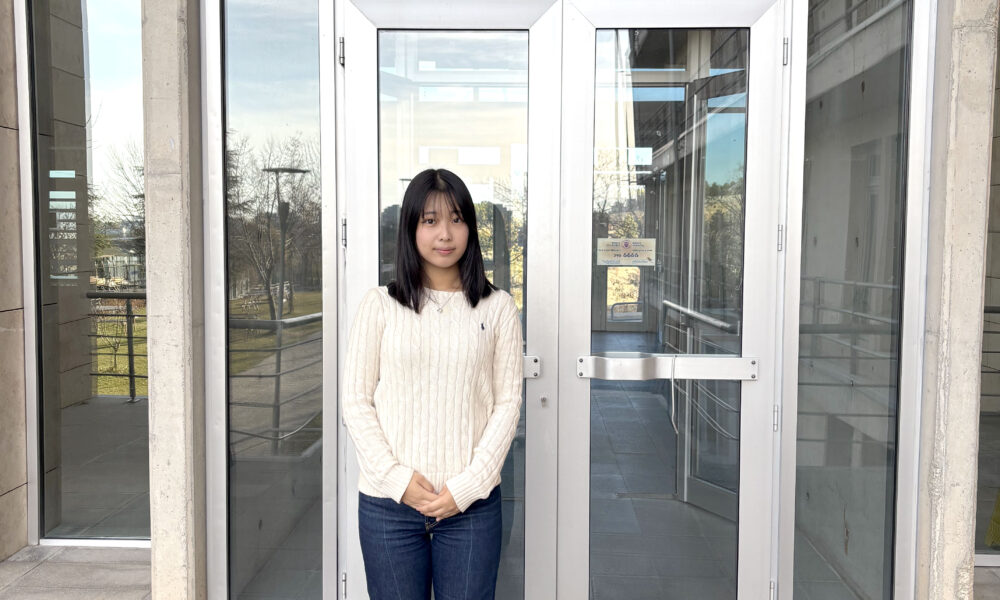
Name: Sakurako Ishiguro
Department: MBG/III Exchange
Country of Origin: Japan
University: National Taiwan University
What were your first impressions about Türkiye?
When I landed in İstanbul from Tokyo, the first thing that hit me was the language—everything was in Turkish, and it suddenly felt very real that I was in Türkiye. From the plane to Ankara, I looked down and saw this endless brown landscape and thought, “What am I looking at?” It was a view I had never seen in my life, and I even took a video because it felt so strange and fascinating. In my head İstanbul had always been the capital, so seeing Ankara from above, calm and not at all chaotic, was surprising, especially because I’m used to the crazy busy vibe of Tokyo.
What do you like best about Bilkent and Türkiye?
At Bilkent, I love how curious and friendly everyone is toward international students. In most of my MBG classes I’m the only international student, yet people still come over, ask where I’m from and switch to English so naturally that I feel very welcome. In Türkiye overall, the food has completely won me over—I eat a lot but somehow I’ve lost weight, probably from all the walking, living my private school life with big green areas and quiet corners. I love exploring the city and visiting bazaars like the one in Ulus, which feel lively and similar to Taiwan’s night markets, “ye shi” (夜市).
Are there any similarities between Türkiye and your home country?
One of my favorite small similarities is tea: in Turkish it’s “çay,” in Japanese it’s “Ocha” and in Chinese it’s “cha,” (茶) which makes me smile every time I hear it. Tea is a big part of life both in Japan and in Türkiye, and there are also strong traditions around it, like formal tea culture in Japan and the everyday social çay culture here. Beyond tea, both countries can be quite traditional in their own way, and there’s a shared sense of respect and manners.
What will you miss most about Bilkent and Türkiye?
I will definitely miss the people the most—every person I meet here has a completely different background and story, and talking to them makes me feel like I’m travelling the world without leaving Ankara. I focus on the quality of my interactions, and in Türkiye I’ve had so many positive ones that I know I’ll carry these memories with me. I’ll also really miss my professors. My MBG coordinator, for example, not only helped with course registration but also spends extra time after class explaining topics he knows are hard for me, which makes me feel seen and supported. Outside of class, I love the cozy bars, the lively nightlife and all the late-night conversations that come with them.
What’s your favorite place on campus, and why?
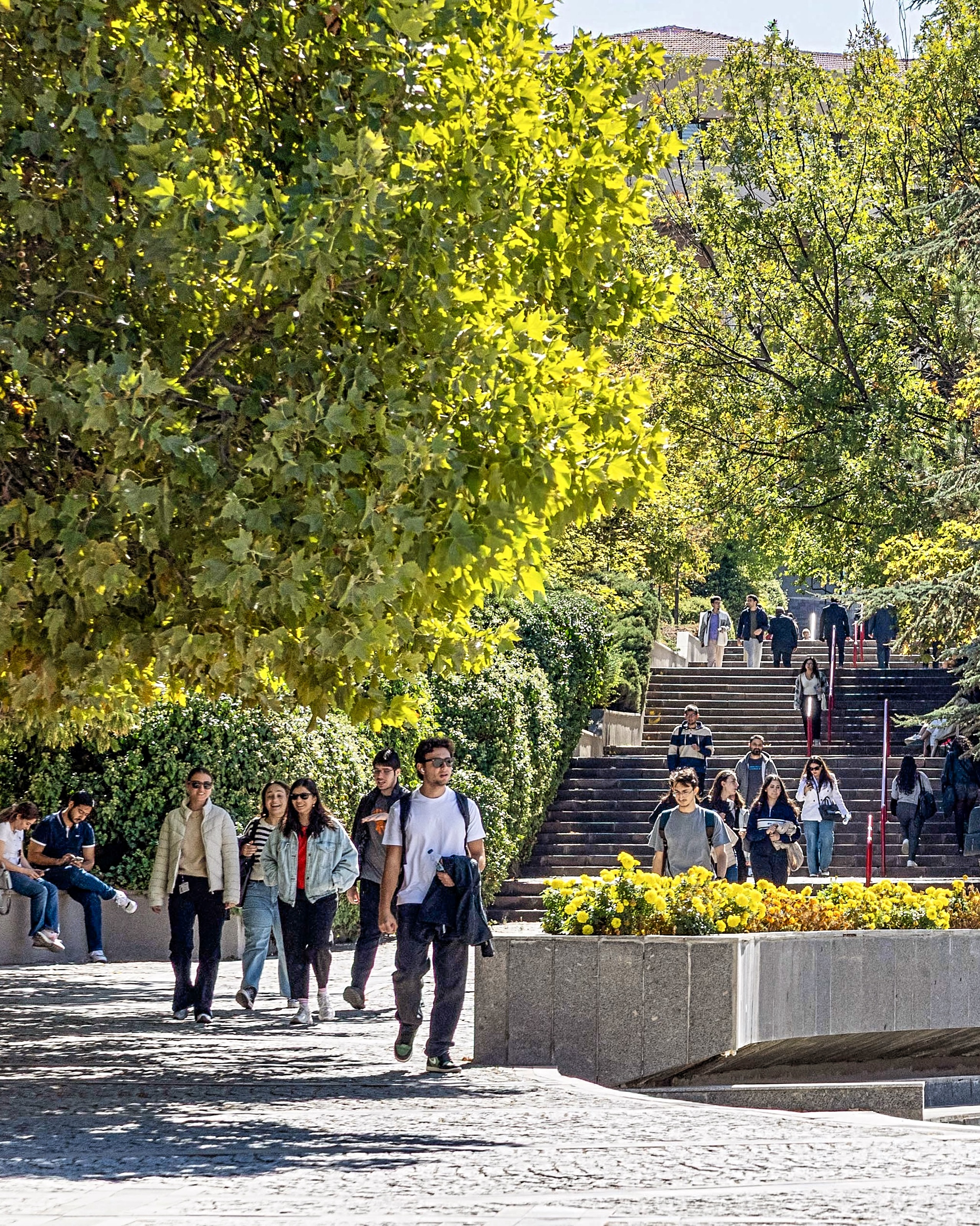
My favorite spot is wherever I can find one very specific cat: a white cat with a big spot on its back that often hangs around the chairs next to the FF building, near the stairs leading down toward the cafés. When that cat decides to sit on my lap, it can stay there for two hours straight, and I just sit, pet it and enjoy the peace around me. In general, I love that Bilkent is full of benches and quiet corners where you can sit, chill and feel like the campus is your own little world.
What’s your favorite Turkish food and why?
The dish that completely shocked my taste buds in the best way is kunefe—this warm, sweet dessert with cheese inside and crispy layers on top. I tried it for the first time at Bilkent Center after a German friend, who is obsessed with it, kept telling me about it. It was unlike anything I’d ever had in East Asia. I’m also a big fan of döner kebap and kebaps in general; I might call myself “simple,” but these are honestly perfect comfort foods for me.
Where do you expect to see yourself 10 years from now?
Ten years from now, the one thing I’m sure about is that I want to be travelling a lot and experiencing life in different countries. Since I was a child, I’ve been lucky enough to visit places like New Zealand, Canada, the US, Mexico, Malaysia, the UK, Taiwan, and now Türkiye, often staying long enough to actually live a bit of local life. Those experiences have made me interested in a life in which I can move around the world, and I’ve even considered becoming a diplomat because I speak several languages and enjoy connecting with people from different cultures. At the same time, I still love Japan, so my future might be a mix of travelling and returning home. Wherever I end up, I want to keep that sense of movement, curiosity and discovery that I’ve had as a student abroad.
What’s one thing you learned from Turkish culture?
The biggest thing I’ve learned is just how deep the love for çay goes here; it feels like a lifestyle. Wherever you go, there is almost always a small glass of tea nearby, served in those hourglass-shaped cups that look so cute and iconic. I love how tea here is both casual and meaningful—you sit, talk and let time slow down over çay. This made me see tea differently and appreciate the social side of it more. It’s a piece of Turkish culture I definitely want to bring back home with me, maybe along with a set of those small glasses.
What places have you visited in Türkiye, and which one is your favorite?
So far, I’ve visited İstanbul and İzmir but surprisingly my favorite is Ankara. In İzmir, I didn’t spend much time in the city itself; we mostly went to historical and archaeological sites like Ephesus, which were beautiful, and I still remember eating an amazing kebab there. İstanbul, on the other hand, felt huge and intense, more like Tokyo in terms of chaos and energy. I know it “owes” me another visit because a weekend was not enough to explore everything. Ankara wins for me because of its chill vibe and the way it has started to feel like home. When you live somewhere, you recognize faces, find your spots and slowly claim the city as yours. Just walking around during the day, going out in Tunus in the evenings and discovering new places has made Ankara a place I’m emotionally invested in, which makes it special.
What’s an interesting question or comment you hear frequently at Bilkent/in Türkiye?
The most common question I get is, “Where are you from?” followed immediately by, “Why do you study in Taiwan?” and “Do you speak Mandarin?” People are often surprised that I’m Japanese but study in Taiwan, because many assume you’ll study in your home country. These questions always lead to fun conversations about Taiwan, languages, and how I ended up there.
Describe yourself in three words.
Talkative, outgoing, disciplined.
How is the studying experience at Bilkent?
Academically, studying at Bilkent has been challenging in a good way: many of my MBG courses here are more advanced than what I’ve taken in Taiwan, so I’ve had to push myself to keep up. The professors are engaging and supportive, which makes the tough workload feel more manageable. Learning Turkish has been another big challenge; after picking up Mandarin relatively quickly, I thought I was good at languages, but Turkish humbled me. My Turkish friends still encourage (or force) me to speak, and one even told me I had to get a good grade on my Turkish exam. The only thing I will never get used to are the right-handed exam desks; as a left-handed student, I have to twist my whole body to write, so sometimes it looks like I’m cheating when I’m really just trying to survive the table, haha.